A full cutaway view of the valve body exposes the complete internal design characteristics, flow path, valve stem, compressor connection, backseat, front-seat, packing and gauge port, while retaining its operational characteristics.
Somos® WaterShed® AF is a multi-purpose stereolithography resin that meets the requirements for investment casting patterns, as it is antimony-free. Patterns created with Somos WaterShed AF leave much lower ash residue after burnout, reducing clean-up and speeding up mold production.
Multipurpose resin that prints 50% faster than alternatives eliminating the need for painting.
Somos®® WaterShed XC 11122, has up to a 50% faster processing speed, offering minimal finishing and more consistent processing over time. Compared to alternatives currently on the market, Somos® WaterShed Black prints a more true black color off the machine. The material offers a smooth surface finish and higher moisture and chemical resistance.
Somos® WaterShed® Black provides a solution to build rigid, tough parts, while eliminating the need for painting. With similar properties and processing as Somos® WaterShed® XC 11122, this multipurpose resin provides the same benefits in a black stereolithography material.
Somos® WaterShed® XC 11122 is the clear solution for designers looking for ABS and PBT-like properties for stereolithography technology. One of our most popular resins, Somos WaterShed XC 11122 produces highly detailed parts with superior clarity and water-resistance.
As one of the industry’s most popular materials, Somos® WaterShed® XC 11122 is the clear solution for numerous applications. Whether you’re a designer looking for highly detailed parts with superior clarity and water resistance or an engineer focusing on durability for functional testing, Somos® WaterShed XC 11122 mimics the look and feel of clear thermoplastics, such as ABS and PBT.
Somos® WaterShed® XC 11122 produces optically clear parts with a smooth finish, and it’s ease of use helps to shorten product development and testing. This versatility means Somos® WaterShed® XC 11122 is the ideal material in markets such as automotive, aerospace, and consumer electronics for applications including packaging, RTV patterns, durable concept models, wind tunnel testing, and investment casting patterns.
In motorsports – as in automotive, rail, and aerospace – speed is key. Getting ready for a race, from design to the track, you need to be the fastest. Printing your wind tunnel models with Somos® PerFORM Reflect saves more than 30% post-treatment. So, you can get your aerodynamic designs onto your vehicle faster – and be more competitive on the track, road, rail, or air.
In Formula One, a car body is typically printed at 60% of its normal size for simulation purposes and checked with particle imaging velocimetry (PIV) in critical areas. Somos® PerFORM Reflect is a new and unique stereolithography material developed specifically for 3D printing parts for wind tunnel testing with PIV. With this innovation, Stratasys again sets a standard in enabling faster aerodynamic design optimizations – in motorsports and beyond.
Somos® PerFORM Reflect produces strong, stiff, high-temperature resistant composite parts that are ideal for wind tunnel testing. Extensive tests show that the new Somos® PerFORM Reflect reduces post-processing by more than 30%, eliminating the need for additional PIV coatings. This translates into faster data collection, decreasing overall lead time per design iteration and allowing customers to conduct iterations faster.
Somos® PerFORM Reflect utilizes patented new technology that reduces and even eliminates much of the finishing work required with traditional materials. Based on Stratasys’ industry-standard Somos® PerFORM, Somos® PerFORM Reflect demonstrates all the performance attributes that customers rely on, such as low viscosity, low settling, fast processing, high stiffness, and heat resistance.
Additive manufacturing has fundamentally changed how complex, hollow composite parts are created. Somos® DMX SL™ 100 provides an unparalleled solution for producing tough, complex hollow composite parts with a superb surface finish and high feature detail.
No other solution allows such easy removal after the autoclave process, enabling multiple iterations to be implemented quickly. This results in tough, complex hollow composite parts with superb surface finish and high feature detail.
Somos® PerFORM Reflect™ produces strong, stiff, high-temperature-resistant composite parts ideal for wind tunnel testing with PIV. Printing your wind tunnel models with Somos PerFORM Reflect saves more than 30% post-treatment. So, you can get your aerodynamic designs onto your vehicle faster - and be more competitive on the track, road, rail, or air.
Skilling and Upskilling for EV Auto Repair
LJ Create's latest range of Automotive trainers and associated lessons are designed to provide students with the skills and knowledge required to maintain and repair Electric and Hybrid vehicles.
Three Levels of Instruction Provided:
- Complete Vehicle Systems
- Common EV Sub-Systems
- EV Electrical and Electronics Fundamentals
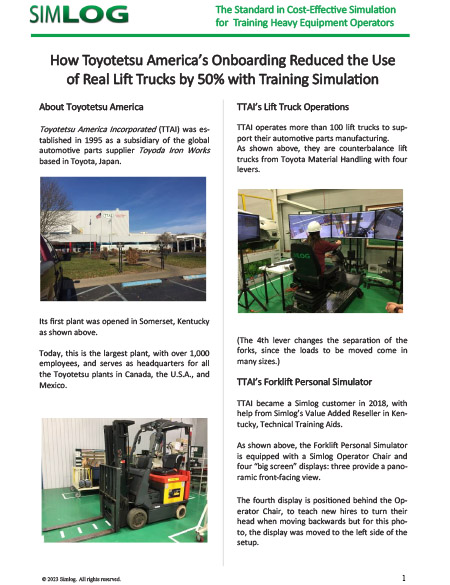
How Toyotetsu America’s Onboarding Reduced the Use of Real Lift Trucks by 50% with Training Simulation
Toyotetsu America Incorporated (TTAI) operates more than 100 lift trucks to support their automotive parts manufacturing. In 2018 TTAI became a Simlog customer and has since trained about 600 Lift Truck Operators. The onboarding program consists of three steps:
- Two days of classroom "orientation"
- Half-day of training simulation
- Half-day of “obstacle course” work at the controls of a real lift truck.
In addition, when an incident occurs on the shop floor and the “root cause analysis” points to a lift truck problem, the Floor Manager can send the operator back to the Forklift Personal Simulator for “refresher” training, to help improve the operator’s skills.
Pages
-
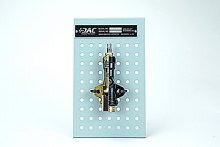 Item Number:373-195
 -
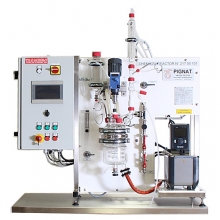 Item Number:REA/3000Pignat's Computerized Chemical Reactor (REA/3000) is a one-gallon, controlled, multi-purpose, jacketed glass reactor system specifically designed for education and research. This unit supports the study of controlled batch chemical reactions and allows students to operate and experience reaction processes and modify the variables upon which the reactions being studied are based.
 -
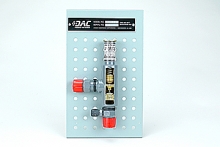 Item Number:373-519This Condenser Pressure Control Valve (KVR) Cutaway provides a full cutaway view of a control valve that exposes the complete internal components and operating principles.
 -
 The Confined Space Entry simulation is ideal for future employees or supervisors who work in or around work environments that utilize confined spaces. This course will equip learners with the knowledge and skills necessary to safely enter and work in confined spaces.
 -
 The Construction Electrical Hazard awareness simulation is ideal for future employees and supervisors who work in or around active construction sites. The primary goal of this course is to teach workers safe work procedures to follow while working around electrical hazards in a construction environment.
 -
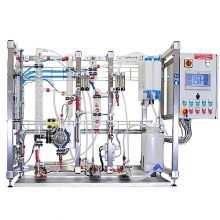 Item Number:DVI/100Pignat's compact, benchtop Continuous Distillation trainer (DVI/100) allows students to operate a continuous distillation process. Expertly crafted glass components show the flow of fluid through the complete process in both liquid and gaseous phases. With an efficient startup time, steady-state operation can be reached in 20 minutes.
 -
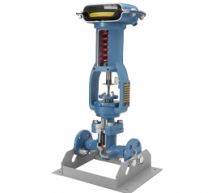 Item Number:255DAC Worldwide’s Control Valve Cutaway, .75"-1.5" (255) supports realistic classroom training in the operation, construction, and maintenance of a pneumatically-operated control valve used in industrial process systems. The complete internal configuration of the valve’s actuator and body is exposed and showcased through carefully-planned sectioning and color-coding.
 -
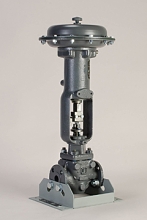 Item Number:255KDAC Worldwide's dissectible (255K) is a realistic, hands-on valve sample that supports realistic classroom training in the disassembly, inspection, and reassembly of a full-size industrial diaphragm-actuated control valve.
 -
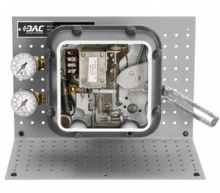 Item Number:273-810DAC Worldwide’s Control Valve Positioner Cutaway (273-810) is a detailed, sectioned, professionally-crafted control valve positioner cutaway that depicts a common control valve positioner.
 -
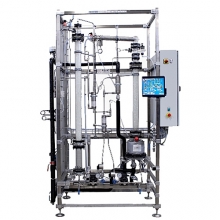 Item Number:ABR/3000The regeneration process is observed on the second column, which is continuously fed. An energy‐saving heat exchanger is placed between the two columns to optimize energy usage. With this unit, students are able to study various control loops, determine mass balance, and process efficiency. The unit also includes a LabView monitoring system.