Building an Effective Electrical Training Program
Preparing the Next Generation of Electrical Technicians
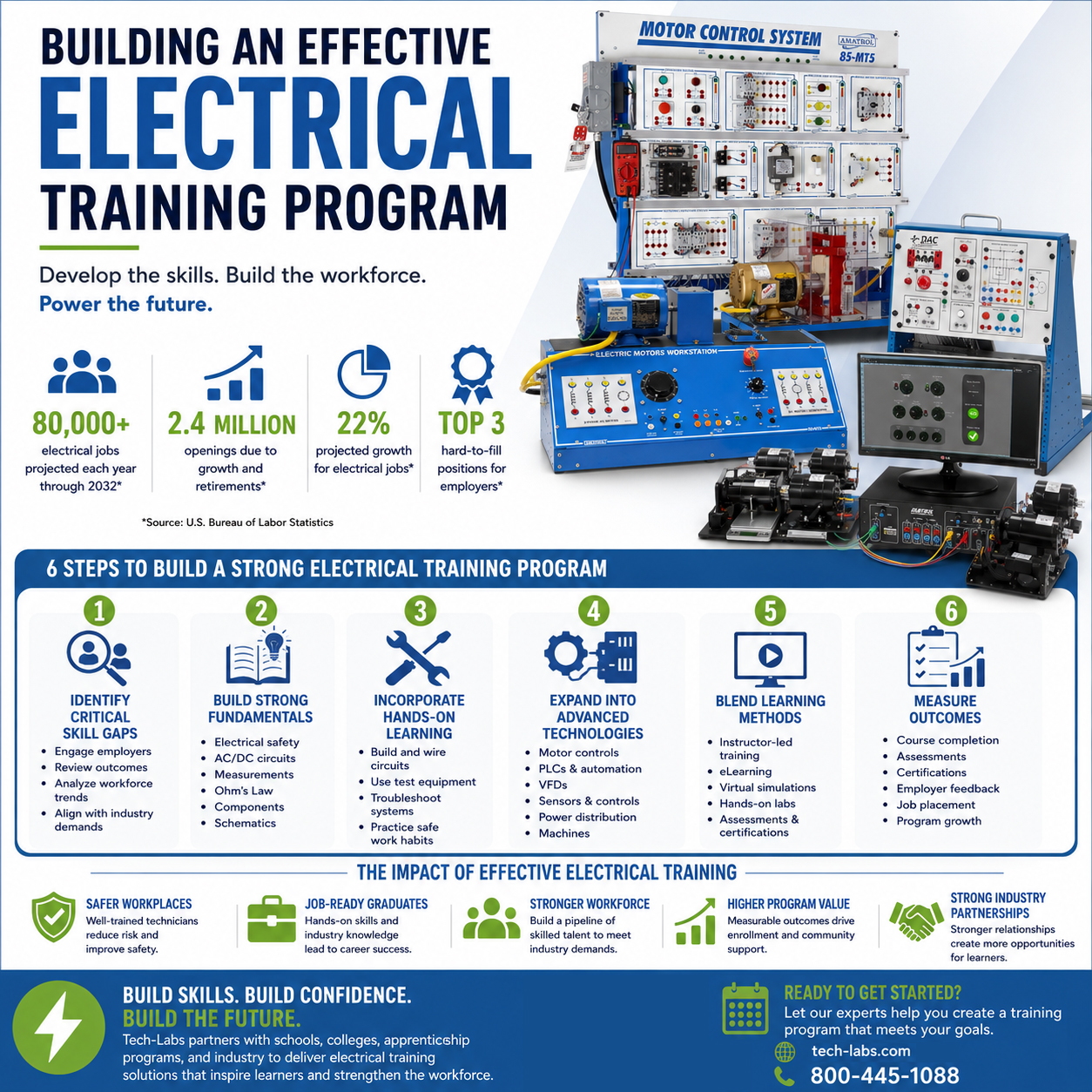
Electrical systems are becoming more advanced across manufacturing, construction, energy, transportation, and industrial environments. As technology evolves, so does the need for technicians who can safely install, maintain, troubleshoot, and operate modern electrical systems.
For schools, colleges, apprenticeship programs, and workforce training organizations, this creates both a challenge and an opportunity. A strong electrical training program can help close skill gaps, prepare learners for in-demand careers, and support employers that need qualified technical talent.
Why Electrical Training Matters
Electrical skills are foundational to many technical careers. From basic circuits to advanced motor controls and automation, learners need more than textbook knowledge. They need practical experience that helps them understand how electrical systems work in real-world environments.
Effective training programs combine theory, safety, hands-on practice, troubleshooting, and industry-aligned technologies. This approach helps learners build confidence while developing the skills employers expect.
Common Challenges Facing Electrical Training Programs
Many organizations are working to strengthen electrical training while also managing limited budgets, aging equipment, instructor capacity, and changing workforce needs.
- Limited hands-on training opportunities
- Aging or outdated lab equipment
- Growing demand for automation and controls skills
- Difficulty aligning curriculum with employer needs
- Limited time for instructor-led troubleshooting practice
- Pressure to improve student outcomes and job readiness
Addressing these challenges requires a clear strategy that connects foundational learning with practical application.
6 Steps to Build a Strong Electrical Training Program
Before investing in new equipment or curriculum, it is important to understand where skill gaps exist. Programs should gather input from instructors, advisory boards, employers, students, and graduates.
- What skills are local employers requesting?
- Are students prepared for entry-level electrical roles?
- Which concepts are most difficult for learners to master?
- Are automation, controls, or troubleshooting skills becoming more important in your region?
Every successful electrical technician needs a strong foundation. Core concepts help learners understand how systems operate before moving into advanced applications.
- Electrical safety
- AC/DC circuits
- Electrical measurements
- Ohm's Law
- Series and parallel circuits
- Electrical components
- Wiring techniques
- Schematics and diagrams
Electrical training is most effective when learners can apply what they are learning. Hands-on activities help students connect classroom concepts to real equipment and real troubleshooting scenarios.
- Build and wire circuits
- Use meters and test equipment
- Diagnose faults
- Practice safe work habits
- Interpret schematics
- Troubleshoot electrical systems
As electrical roles become more connected to automation and smart manufacturing, training programs should consider adding advanced technologies that reflect today's workplace expectations.
- Motor controls
- Variable Frequency Drives (VFDs)
- Electrical machines
- Power distribution systems
- Industrial automation
- PLCs and control systems
- Sensors and troubleshooting
A blended learning approach allows organizations to support different learning styles while making training more flexible and scalable.
- Instructor-led training
- Hands-on lab activities
- Interactive eLearning
- Virtual simulations
- Competency-based assessments
- Industry-recognized certifications
- Hybrid learning options
This combination helps reinforce learning before, during, and after hands-on lab activities.
Strong programs track results and use data to guide continuous improvement.
- Course completion rates
- Assessment performance
- Certification attainment
- Student retention
- Job placement outcomes
- Employer feedback
- Program growth
The Impact of Effective Electrical Training
When electrical training is aligned with workforce needs, organizations can create stronger outcomes for learners, instructors, employers, and communities.
- Safer workplaces: Well-trained technicians understand proper procedures and reduce risk.
- Job-ready graduates: Learners gain practical experience that supports career success.
- Stronger workforce pipelines: Employers benefit from a larger pool of qualified talent.
- Higher program value: Measurable outcomes can support enrollment, funding, and community partnerships.
- Industry partnerships: Training programs become more aligned with local and regional workforce needs.
Build Skills. Build Confidence. Build the Future.
Electrical training programs play a critical role in preparing the next generation of technicians. By combining strong fundamentals, hands-on learning, advanced technologies, and measurable outcomes, organizations can create training pathways that prepare learners for real-world success.
Tech-Labs partners with schools, colleges, apprenticeship programs, and industry to develop electrical training solutions that support workforce development goals.
Ready to strengthen your electrical training program?
Contact us to discuss your goals and explore training solutions that fit your program needs.
- Identify your current training gaps.
- Define your workforce development goals.
- Explore hands-on and blended learning options.
- Build a training pathway that supports long-term success.
Let’s build the electrical workforce of the future—one skill at a time.