Part 2 of 2: Closing the Skills Gap Through Standards-Aligned Training
Technologies Reshaping Transportation: The Workforce and Skills Gap They Are Creating
In Part 1, we explored the technologies reshaping transportation—electrification, autonomy, connectivity, and advanced manufacturing—and the speed at which they are transforming vehicles, infrastructure, and logistics. While these innovations promise safer, cleaner, and more efficient systems, they also introduce a challenge that cannot be solved by technology alone. As transportation platforms become more complex and interconnected, the pace of innovation is now outpacing workforce readiness, creating a widening gap between what modern systems require and what the workforce is prepared to deliver.
I have seen this gap firsthand over the years—in classrooms, in labs, and in conversations with educators, employers, and technicians. The issue is rarely a lack of motivation or capability. More often, it is a lack of access to training that reflects today’s technology and the standards employers now expect. Innovation is moving quickly, but too many training models remain anchored in a past version of the industry.
A Skills Gap That Is Already Impacting the Industry
Across automotive, aerospace, logistics, and transit sectors, employers are struggling to find talent with the right combination of skills. This challenge is not simply a shortage of workers; it is a mismatch between traditional training models and modern job requirements. Today’s transportation professionals must understand high-voltage electrical systems, battery technology, power electronics, vehicle networks, and software-driven diagnostics, all while operating within increasingly rigorous safety standards.
With deep experience addressing the transportation skills gap, Tech-Labs and X-Cal consistently hear the same concern from business leaders: candidates often appear well-qualified on paper, yet struggle when asked to work confidently with high-voltage systems or advanced diagnostics in real-world settings. As a result, employers are forced to delay technology adoption or invest significant time and resources in retraining to reach baseline proficiency. This challenge is not a reflection of learner capability, but a clear indication that training models must evolve to keep pace with modern transportation systems.
“We are in trouble in our country. We are not talking about this enough. We have over a million openings in critical jobs—emergency services, trucking, factory workers, plumbers, electricians, and tradespeople. It’s a very serious thing.”
— Jim Farley, CEO of Ford Motor Company
Fortune
Why Traditional Training Models Are Struggling to Keep Up
For decades, transportation education emphasized component-level knowledge focused on engines, drivetrains, hydraulics, and mechanical repair. While these fundamentals remain essential, they now represent only part of what modern roles demand. Today’s transportation systems are fully integrated across mechanical, electrical, and digital domains, requiring technicians and engineers to understand how each subsystem interacts with the others.
I have watched capable students excel in theory-based environments only to hesitate when confronted with live systems—not because they lack ability, but because they have never been given the opportunity to safely engage, test, and troubleshoot at a systems level. When learning stops at diagrams and lectures, confidence rarely survives first contact with complexity.
Hands-On Learning Aligned to Industry Standards
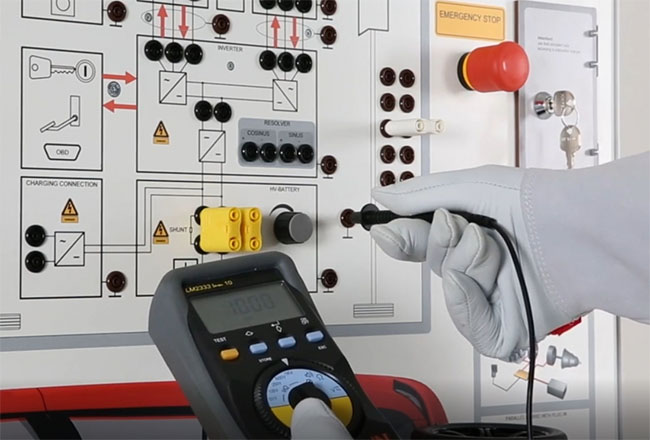
As transportation systems grow more sophisticated, hands-on learning has become essential rather than optional. Lab-based environments that mirror real transportation platforms allow learners to safely interact with electric drivetrains, advanced sensors, and networked systems before entering the workplace. These experiences accelerate confidence and shorten the transition from classroom to career.
Just as important as hands-on exposure, however, is alignment with recognized industry standards. As electric vehicles become a permanent part of the transportation landscape, employers need assurance that training reflects nationally defined competencies. One of the most critical benchmarks in this space is the EV certification framework established by the National Institute for Automotive Service Excellence (ASE), particularly the ASE L3 certification, which defines comprehensive competencies for electric vehicle diagnosis, service, and high-voltage safety.
Training systems from Lucas-Nuelle align with the full scope of ASE EV competencies, enabling learners to build practical skills that directly map to industry expectations. Rather than learning isolated concepts, students develop an integrated understanding of battery systems, power electronics, electric drivetrains, diagnostics, and system safety. I have seen how this alignment transforms the learning experience—students move from uncertainty to confidence because they know the skills they are developing are relevant, validated, and transferable.
This work is further supported by Tech-Labs and X-Cal, which pair ASE-aligned EV training with Smart Automation Certification Alliance (SACA). These credentials help verify mastery of critical competencies before students ever enter the workforce, giving employers clearer insight into what graduates can actually do—not just what they have studied.
Learning Tested Under Real Pressure
One of the clearest indicators of workforce readiness is how skills perform under real conditions. That is why it is significant that ASE-aligned Lucas-Nuelle EV training systems are used in the national SkillsUSA competition. SkillsUSA represents one of the highest benchmarks for career and technical education in the United States, requiring students to demonstrate technical proficiency, safety awareness, problem-solving ability, and professionalism under time-constrained, performance-based conditions.
Watching students compete in this environment reinforces an important truth: when training is aligned to national standards and grounded in hands-on practice, learners rise to the challenge. These are not abstract skills—they are capabilities tested in conditions that closely resemble modern service, manufacturing, and diagnostics environments.
Preparing a Cross-Disciplinary Transportation Workforce
The evolution of transportation technology has blurred traditional disciplinary boundaries. Roles that were once clearly mechanical or electrical now require hybrid skill sets that include software awareness, data interpretation, and systems-level thinking. The most effective technicians and engineers today are those who can diagnose across domains and understand how digital decisions affect physical outcomes.
Education and training programs that integrate mechanical fundamentals with electrical systems, automation, diagnostics, and safety principles are better aligned with how modern transportation systems actually function. When this integration is reinforced through nationally recognized standards and validated through credentials and competition, learners graduate with confidence that extends well beyond the classroom.
-
What is the transportation skills gap?
It’s the mismatch between modern transportation job requirements—EV systems, diagnostics, networks, and high-voltage safety—and the training many candidates receive. -
Why are EV skills harder to teach with traditional models?
Because EV service and diagnostics require systems-level troubleshooting, software awareness, and safe interaction with high-voltage components—skills that can’t be built through lectures alone. -
What does ASE L3 cover?
ASE L3 focuses on electric vehicle diagnosis, service procedures, and high-voltage safety competencies that employers recognize as a benchmark for EV readiness. -
How do credentials like SACA help employers?
They provide a consistent way to validate hands-on mastery, making skills visible and comparable beyond course completion or transcripts.
- CTE programs preparing EV and advanced transportation technicians
- Community colleges and university labs modernizing transportation curriculum
- Employers needing faster onboarding for EV and high-voltage roles
- High-voltage safety procedures and best practices
- EV battery systems, power electronics, and drivetrains
- Networked vehicle diagnostics and troubleshooting workflows
- Systems-level problem solving across mechanical and electrical domains
Building the Workforce That Will Power the Future
Transportation is entering a pivotal era defined by electrification, automation, and connectivity. While these technologies hold tremendous promise, their success ultimately depends on the workforce that supports them. In my experience, the limiting factor is rarely technology itself—it is preparation.
When hands-on learning is tied to nationally recognized standards like ASE L3, reinforced through credentialing frameworks such as SACA, and delivered through partnerships involving Tech-Labs and X-Cal, training becomes more than exposure—it becomes validation. Students gain confidence that their skills are relevant and transferable, and employers gain assurance that those skills meet real-world expectations.
Closing the transportation skills gap is not about predicting the future; it is about preparing for what is already here. By modernizing training, integrating cross-disciplinary learning, and grounding education in recognized standards and credentials, the industry can build a workforce ready not just to adapt to change—but to lead it.
About the Author

Chris Harris brings a unique perspective as President at Tech-Labs and X-Cal, a mindset and performance expert, and a former elite trainer for military special forces. With a 25-year background in high-performance leadership, Harris has authored 14 books—including Bridging America’s Skills Gap, co-authored with Mark Goodman—and inspired audiences in over 60 countries.