Flexible microcontroller training with EBlocks 3 from Matrix TSL. Teach Arduino, PIC, and ESP systems with Flowcode integration, Auto ID, and hands-on learning.
Sensors and Microcontrollers
CP1972
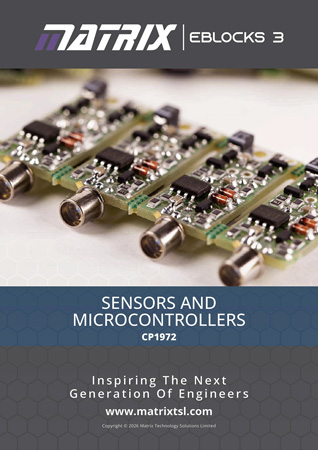
Matrix TSL’s Sensors and Microcontrollers curriculum introduces students to key concepts in sensor integration and microcontroller-based system design. Developed to support hands-on learning, this curriculum helps learners explore how analog and digital sensors are used to collect, interpret, and display data in practical applications.
Identified by CP1972, this curriculum includes activities focused on analog sensors such as potentiometers, light sensors, and thermistors, as well as digital sensors, including temperature/humidity and g-force devices. Students also work with LCD data, graphing, and communication methods such as I2C and SPI, helping to build a strong foundation in embedded systems and electronics. The curriculum also includes free YouTube video support, Flowcode Wiki examples, and approximately 8 hours of core worksheet learning.
This curriculum introduces students to core sensor technologies and how microcontrollers interact with real-world inputs and outputs.
- Analog sensors, including potentiometers, light sensors, and thermistors
- Digital sensors, including temperature/humidity and g-force sensors
- Graphing sensor data on LCD displays
- I2C and SPI bus communication
- Hands-on activities that connect theory to embedded system applications
In addition to worksheet-based activities, Matrix TSL supports this curriculum with additional resources to help instructors extend lessons and reinforce concepts.
- Free videos available on YouTube
- Examples available through the Flowcode Wiki
- Approximately 8 hours of learning in the core worksheets
- Useful for introducing sensor integration within microcontroller programming projects
The Sensors and Microcontrollers curriculum is well-suited for programs that want to build foundational skills in electronics, embedded systems, automation, and engineering technology. It can support classroom instruction, guided lab activities, and technical training environments where students need practical exposure to sensor-driven systems.
- STEM and engineering education programs
- Electronics and microcontroller courses
- Career and technical education labs
- Instructor-led or independent practical learning