DAC Worldwide’s Screw Pump Cutaway (278-190) depicts a sectioned industrial screw-type pump allows for convenient and realistic classroom training in the operation, construction, and maintenance of common process pumps used in various applications across the globe.
Module 15: Cantilever Racks and Flatbed Truck has trainees working with cantilever racks and a flatbed truck, picking up each marked load and placing it at its target position defined by an outline of the same color as the load, using the overhead map for guidance.
Simlog's Reach Lift Truck Personal Simulator puts you at the controls of a typical stand-up “narrow aisle” lift truck with a scissors-like pantograph to extend and retract the forks. Training scenarios are typical of warehouses and distribution centers where racking systems are tall and closely spaced to increase storage density.
The immersive all-in-one operator training simulator
The Vortex Advantage is an immersive, motion-enabled training simulator that develops transferable operator skills. It’s designed for extended training, including mastering advanced skills. With professional-grade hot-swappable controls sets and pedals, the Vortex Advantage delivers high-quality training and flexibility, powered by the industry’s leading simulation software.
Benefits
- Safe, effective training, 24-7
- All-in-one training platform
- Built to last
Monitor, assess, and engage construction equipment operator trainees from a single workstation
CM Labs’ Instructor Operating Station (IOS) gives instructors complete control of operator training sessions. You can initiate exercise sessions, monitor operations from your seat, and challenge trainees by exposing them to various tasks and job site conditions. It is the only solution on the market that provides instructors with a real-time 3D view of learning progress from any vantage point on the virtual work site.
Benefits
- Challenge trainees for maximum learning effectiveness
- Benchmark trainees easily with smart assessment tools
- Enable full team-based training in a single classroom
Operator training and assessment, whenever and wherever needed.
CM Labs’ Mobile Training Center allows organizations to offer training and assessment where needed most. Whether on the road or at remote locations, the Mobile Training Center was designed for all-season versatility and use.
Benefits
- Multiply your training capabilities
- Bring training to the job site
- Memorable branding
Train to worksite standards in the classroom
With CM Labs Simulations’ Signalperson Training Station, trainees learn critical worksite skills, such as communication and teamwork, in a safe environment. While one trainee operates a crane on a Vortex simulator, another works cooperatively within the virtual job site, providing signals and guiding the operation through to successful completion via a webcam and picture-in-picture display.
Trainees can move around the worksite to inspect the lifting area, recognize potential hazards, gain a clear view of all site activities, and provide hand signals to the crane operator.
Together, they either fail as a team — or succeed as a team. The result: new operators that are better prepared for any job site.
Simulator Adoption Made Easy with CM Labs’ SimGuide Service
CM Labs’ SimGuide Service is designed to simplify the integration of your new simulator. We’ll guide you throughout the process of setting up and implementing your simulator, no matter what your objective.
With the SimGuide Service, you get a complete road map detailing how and when to use your simulator to meet your targets.
The SimGuide Service is for organizations at any stage of simulator adoption, whether developing a simulation-based training program for the first time, or extending the use of existing their CM Labs simulators.
CM Labs’ Excavator Simulator Training Pack: Operator readiness for today’s job sites.
CM Labs’ Excavator Simulator Training Pack is an all-in-one solution for learning critical operator skills, including basic operations, advanced skills, worksite collaboration, and the latest operator assistance technology.
There’s no simpler or safer way to prepare operators for the tools that are part of today’s highly technical job sites.
Vortex simulators: best-in-class training
CM Labs equipment training simulators provide operators with the skills to operate equipment safely and efficiently. Trainees can practice challenging real-world operations in complete safety while key operating performance metrics are objectively logged and recorded throughout training.
Operators can prepare for the routine and the unexpected. This makes our simulators invaluable for teaching safe, productive, economic machine use. With swappable controls and configurations ranging from the desktop to an immersive five-display simulator, Vortex simulators are built to run a wide range of training packs. Each Simulator Training Pack features self-guiding, progressive learning programs, and best-in-class simulation.
- Crane and Lifting Equipment
- Earthmoving Equipment
The Digger Derrick Simulator Training Pack is the only solution that accurately replicates machine stability and engine behavior, reducing the likelihood of accidents due to tipping. Designed to support training for specialized techniques of drilling and setting poles, the learning path guides trainees through increasingly challenging tasks. It includes exercises to prepare for the EICA crane certifications exam.
Key features & benefits
The Digger Derrick simulator offers a rigorous program to ensure operators prepare for various real-world drilling scenarios and maneuvering. Part of CM Labs’ range of simulated lifting machinery, it is an ideal solution for the utility market, training schools, or organizations with a wide range of equipment in their fleet.
Pages
-
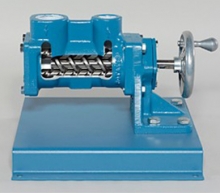 Item Number:278-190
 -
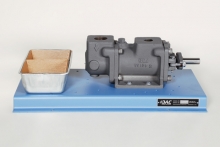 Item Number:275-190DAC Worldwide’s Screw Pump Dissectible (Imo) (275-190) is one of a limited group of enhanced dissectible products. This re-manufactured, realistic dissectible industrial pump can be used for training relating to the repair and overhaul of specialized process pumps.
 -
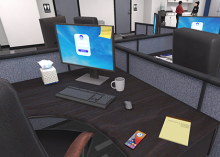 This course will educate learners on best practices for maintaining general security in the workplace and safeguarding against cyber threats.
 -
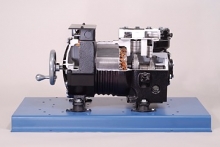 Item Number:373-120DAC Worldwide’s Semi-Hermetic Compressor Cutaway (373-120) is an expertly-sectioned example of a common intermediate (1”-1 ½”) horsepower semi-hermetic refrigeration compressor that facilitates and supports practical training in compressor design, operating principles, and maintenance.
 -
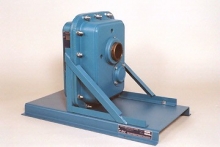 Item Number:205-150The dissectible features a carefully restored, industrial shaft mounted, hollow-shaft helical gear reducer to provide learners with a realistic training experience
 -
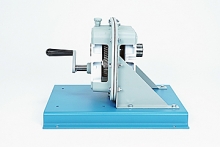 Item Number:205-260Shaft-mounted, hollow-shaft helical gear reducers have a unique set of benefits. On helical gears, the tooth traces are slanted. Compared to other gears, helical gears are stronger and produce less noise because of higher meshing ratios.
 -
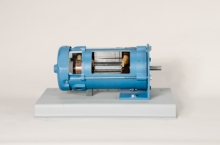 Item Number:273-945This DC shunt-wound induction motor cutaway supports industrial training activities related to electric motor types, as well as repair and troubleshooting.
 -
 Item Number:415-000DAC Worldwide’s Shunt Wound, DC Motor Training System (415-000) features a common shunt wound DC motor used frequently throughout industry. Each motor module includes a welded aluminum mounting baseplate, aluminum control box support structure, and a steel control enclosure.
 -
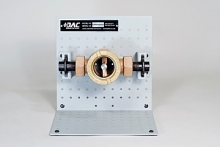 Item Number:272-715DAC Worldwide's Dissectible Sight Flow Indicator Sample (272-715) allows for close visual inspection of a common in-line flow indicator to better understand its function, design, and operation.
 -
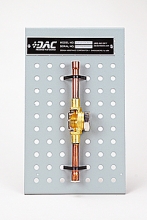 Item Number:373-652This Sightglass with Moisture Indicator Cutaway provides a full cutaway view of a sightglass that exposes the complete internal components and operating principles.