

The EDUMiLL is a revolutionary system that incorporates technologies from the additive and subtractive manufacturing fields to open the door to a new realm of possibilities and further innovation by making it affordable to include a 3D printer and a robust CNC mill in one package.
Resilient high-resolution elastomers for applications requiring excellent tear strength or rebound performance.
Fast printing materials for end-use applications requiring cosmetic surfaces, fine features, and high accuracy.
Materials for application-specific requirements such as flame smoke and toxicity, HDT or mold durability.
Medically certified materials for devices where aesthetics, durability and biocompatibility are critical.
Impact-resistant resins for functional applications that need to perform under stress and high-load conditions.
Additive manufacturing will only penetrate end-use production if and when manufacturers have access to engineering-grade materials that bring the required properties to their applications - at the time of printing and throughout its lifetime.
Somos® materials scientists are putting their industry-proven photopolymers toolbox to work to develop high-performance materials for DLP/LCD technology. The combination of engineering-grade materials with fast DLP technology at lower cost of entry makes 3D printing accessible to companies looking to transition to additive manufacturing.
Choose from application-specific materials that have proven performance and come with industry-standards testing data.
Preliminary information, subject to change
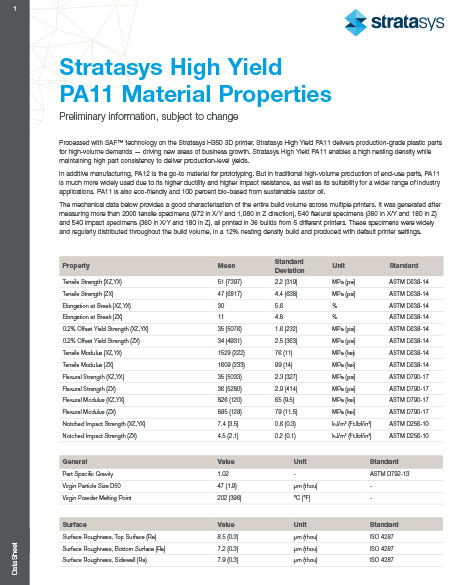
Processed with SAF™ technology on the Stratasys H350 3D printer, Stratasys High Yield PA11 delivers production-grade plastic parts for high-volume demands — driving new areas of business growth. Stratasys High Yield PA11 enables a high nesting density while maintaining high part consistency to deliver production-level yields.
In additive manufacturing, PA12 is the go-to material for prototyping. But in traditional high-volume production of end-use parts, PA11 is much more widely used due to its higher ductility and higher impact resistance, as well as its suitability for a wider range of industry applications. PA11 is also eco-friendly and 100 percent bio-based from sustainable castor oil.
The mechanical data below provides a good characterization of the entire build volume across multiple printers. It was generated after measuring more than 2000 tensile specimens (972 in X/Y and 1,080 in Z direction), 540 flexural specimens (360 in X/Y and 180 in Z) and 540 impact specimens (360 in X/Y and 180 in Z), all printed in 36 builds from 5 different printers. These specimens were widely and regularly distributed throughout the build volume, in a 12% nesting density build and produced with default printer settings.
SAF™ PA12 is available for use with the H350, a material offering numerous benefits, most notably in delivering a high level of accuracy. Tight thermal control on the H350 leads to consistent parts and high nesting densities, and thus more parts per build. The following data highlight the capability of SAF™ PA12.
Stay competitive with best-in-class consistency
Grow your part production business for various industries and applications with a workflow you can fully control. Built for high-volume, short-run production, the Stratasys H350 3D printer gives you control of your materials, workflow, production, and costs while delivering consistency and accuracy print after print. The Stratasys H350 is the first release of the H Series™ production platform, which has Selective Absorption Fusion™ SAF™ technology at its heart to deliver functional, production-grade parts with best-in-class* consistency.
As with other manufacturing techniques, the 3D printing process can be challenging and demands a level of expertise and familiarization.
This guide aims to help designers produce quality, cost-effective parts on the Stratasys® H350™ 3D printer. The guide provides information for both new and experienced users.
The topics covered in this guide describe tools and methods for optimizing design features, strength, and durability of printed parts and ensuring that the parts meet your expectations. It provides best practices and tips on designing for additive manufacturing and examples of how to take advantage of Stratasys' unique features to get the most out of your H350 printer while minimizing printing costs and post-processing issues.
Pages
-
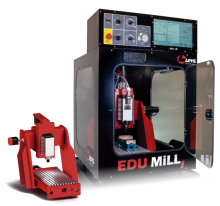 Item Number:EDU-MiLL
 -
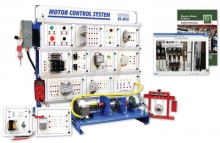 Item Number:85-MT5Amatrol’s Electric Motor Control Learning System (85-MT5) covers electric relay control of AC electric motors found in industrial, commercial, and residential applications. Learners study industry-relevant skills including how to operate, install, design, and troubleshoot AC electric motor control circuits for various applications.
 -
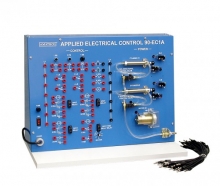 Item Number:90-EC1AThe Applied Electrical Control Learning System (90-EC1-A) teaches learners how to interpret, design, and operate relay control circuits using ladder diagrams. Electrical control is vital in the operation of electric and fluid power actuators and also forms the fundamental building block of automation systems like programmable logic controllers (PLCs), which are programmed using the electrical control schematic method, the ladder diagram.
 -
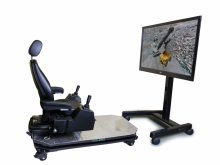 Item Number:ERSThere are eight "Simulation Modules" of increasing difficulty, starting with Controls Familiarization. The final modules combine elements of dipper fill at the rock face, and cab-side or blind-side truck loading. A simulated Mining Truck is built right in, to help teach truck spotting interaction. Key "Performance Indicators" measure how quickly and how carefully the simulated work is performed.
 -
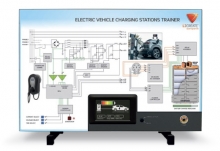 Item Number:743-01This trainer provides students and instructors with the opportunity to demonstrate, investigate and fault-find the circuitry and operation of off-car charging systems.
 -
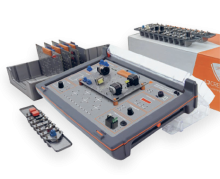 Item Number:730-10 / 730-00Desktop training systems provide very specific instruction and practice in the basic skills that are required by students as they embark on their careers.
 -
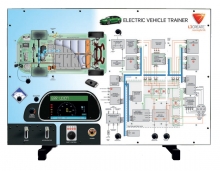 Item Number:740-01LJ Create's Electric Vehicle Systems Panel Trainer provides students and instructors with the opportunity to demonstrate, investigate, and fault-find a simulation of the electrical system of a typical electric vehicle.
 -
 Item Number:810-000Teach the critical safety skill of electrical lock-out/tag-out with DAC Worldwide's Electrical Lock-Out/Tag-Out Training System (Model: 810-000). This hands-on, portable trainer ensures your workforce is prepared to handle hazardous electrical energy safely and effectively.
 -
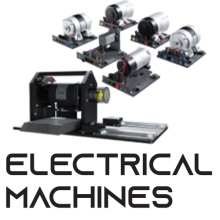 Explore electrical machines, motor control, power conversion, and drivetrain technologies with the Matrix TSL Electrical Machines Training System. A modular, hands-on platform for engineering and technical education.
 -
 Item Number:85-MT7BAmatrol’s Electrical Power Distribution Learning System (85-MT7B) teaches a broad range of electrical advanced manufacturing skills, such as installing, maintaining, and troubleshooting modern power distribution systems that require skills ranging from setting up basic raceways to selecting appropriate over-current protection for sensitive equipment.