

Amatrol’s High School Learning Systems create the need for students to want to learn math and science – they can’t interact with the exciting technology without it. Learning is interactive and challenging, keeping them engaged and wanting to do more. The math and science so desperately needed for 80% of jobs today is a natural outcome.
Turnkey VR Career Exploration Bundles
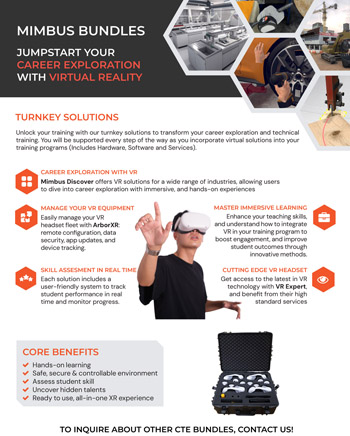
The MIMBUS Career Exploration Bundles make it easy to integrate VR into your training or guidance programs. Each bundle includes preconfigured VR headsets, a tablet, and a durable flight case, so you can start exploring as soon as it arrives. ArborXR enables remote device management, app updates, and analytics, while Vulcan LMS tracks skills and progress in real time.
With Mimbus Bridge, instructors can view and share student perspectives, turning any session into an interactive learning opportunity. Self-paced instructor training ensures your team is ready to maximize VR's potential for student engagement, recruitment, and skills assessment.
Designed for CTE classrooms, career fairs, and workforce agencies, MIMBUS bundles help uncover hidden talents, assess skill levels, and prepare learners for high-demand careers through realistic, hands-on VR experiences.
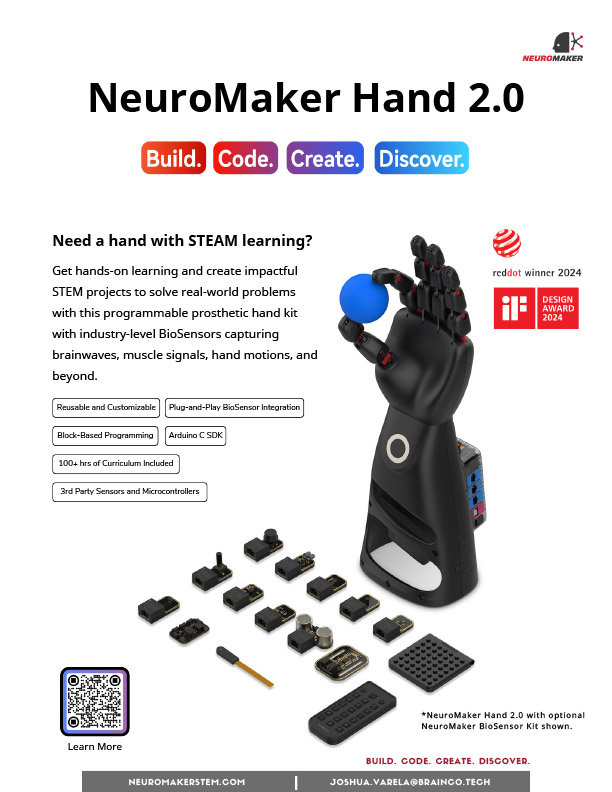
Discover how the NeuroMaker Hand 2.0 empowers students to build, code, and innovate with real-world biomedical technology. This printable brochure introduces key features of the NeuroMaker Hand, including its plug-and-play BioSensor integration and immersive, project-based curriculum.
What You'll Find:
- Highlights of hands-on STEM and CTE learning with prosthetic and biosensor technology
- Overview of coding tools: block-based programming and browser-based Arduino C SDK
- Details on classroom-friendly packaging, reusability, and modular design
- How students address real-world challenges faced by amputees and design inclusive solutions
- Access to student competitions focused on empathy, impact, and innovation
This is a great one-pager to share with educators, grant committees, and educational decision-makers looking for STEM programs with social purpose and advanced skill development.
Ready for a demo or classroom consultation? Contact us today to bring NeuroMaker into your school or program.
Align NeuroMaker STEM Lessons to CTE Pathways
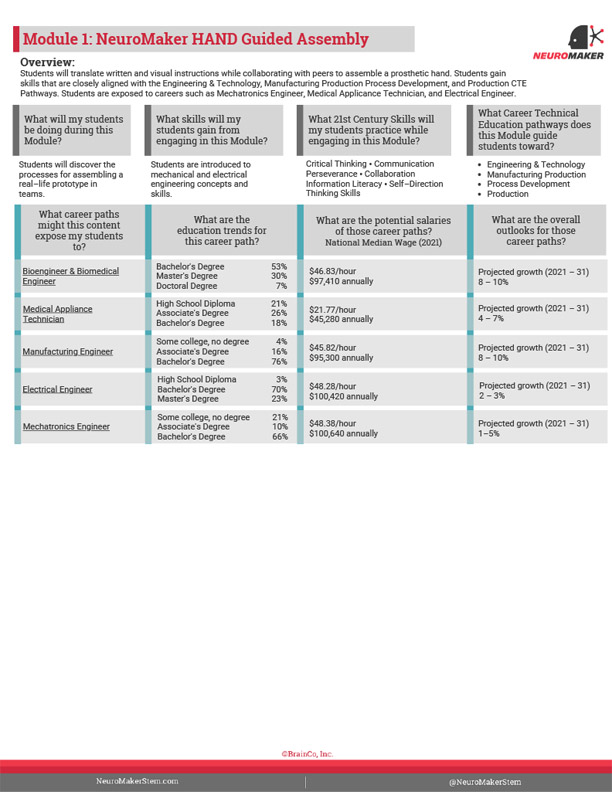
Bridge classroom learning with real-world career pathways using the NeuroMaker Hand CTE Curriculum Crosswork. This resource maps each hands-on module in the NeuroMaker Hand 2.0 program to high-demand CTE pathways such as Engineering & Technology, Biotechnology Research & Development, Programming & Software Development, and more.
Each module outlines the 21st-century skills students will develop—such as critical thinking, collaboration, digital literacy, and innovation—while highlighting corresponding career tracks, salary data, and job outlooks from O*NET. Whether you’re writing a grant, aligning to CTE frameworks, or enhancing STEM/CTE integration, this document is an essential tool for educators, administrators, and program planners.
Explore how NeuroMaker is transforming Career and Technical Education (CTE) classrooms with cutting-edge solutions that combine biotechnology, robotics, and coding. This downloadable two-page overview highlights how the NeuroMaker Hand 2.0 and BioSensor Kit deliver real-world STEM learning through project-based activities and industry-relevant technology.
Highlights
- How the NeuroMaker Hand 2.0 introduces students to biomedical engineering, prosthetic design, and robotic systems
- Ways students can measure EMG signals and code bio-inspired devices
- Curriculum insights: 100+ hours of standards-aligned STEM and CTE lessons
- Applications in real-world biotech and healthcare training
- How NeuroMaker supports equitable access using Chromebooks and reusable hardware
Build. Code. Create. Discover. Download the 2025 Catalog
Download the latest NeuroMaker catalog to explore hands-on STEM programs that blend biomedical engineering, coding, AI, and brain–computer interface (BCI) with project-based learning.
Inside, you’ll find the NeuroMaker Hand 2.0, the BioSensor Kit, the accessible NeuroMaker BCI headband, and the exciting NeuroRacing experience—plus 100+ hours of curriculum, student projects, and professional development options. (English and Spanish resources included.)
Explore:
- NeuroMaker Hand 2.0: A programmable prosthetic hand kit derived from real prosthetics work—teaches design, assembly, and coding.
- BioSensor Kit: Plug-and-play sensors (EMG, flex, and more) to capture muscle signals, motion, temperature, and color for advanced projects.
- NeuroMaker BCI: Classroom-ready EEG headband with activities introducing neuroscience, machine learning, and signal processing.
- NeuroRacing: A brainwave-driven slot-car challenge that builds focus, engagement, and makerspace excitement.
- Curriculum & Projects: 100+ hours of interdisciplinary content, student-oriented projects, and capstone challenges.
- Professional Development: e-learning Suite/Core, live support, docs & FAQs for smooth implementation.
Why educators choose NeuroMaker
- Real-world relevance: Industry-derived activities connect prosthetics, AI, and BCI to authentic problem-solving.
- Flexible implementation: Browser-friendly tools, bilingual materials, and scaffolded lesson plans.
- Student impact: High engagement, career exploration, and 21st-century skill development.

Prepare Students for Real-World EV Maintenance and Diagnostics
The rapid expansion of the electric vehicle (EV) industry has created a nationwide demand for technicians skilled in high-voltage systems, battery technology, and EV charging infrastructure. According to the U.S. Department of Energy, clean vehicle and battery manufacturing jobs are among the fastest-growing in the energy sector, adding over 24,000 new positions in 2023 alone.
Career opportunities are emerging for EV service technicians, electrical diagnostics specialists, energy storage engineers, and charging infrastructure installers. To prepare students for these roles, educators are turning to programs aligned with ASE L3: Light Duty Hybrid/Electric Vehicle Specialist and ASE L4: Heavy-Duty Electric Drivetrain Specialist certifications, as well as SkillsUSA Transportation competitions that emphasize hands-on EV system diagnostics and repair.
Lucas-Nülle’s electric vehicle training systems provide a structured and safe way to teach charging infrastructure, high-voltage safety, batteries/BMS, and power electronics. These modular, industry-standard trainers align directly with ASE and SkillsUSA performance standards, helping students transition from classroom fundamentals to professional EV service careers with confidence.
- ASE L3/L4 Alignment: Trainers support learning outcomes in electrical safety, high-voltage systems, power distribution, and diagnostic procedures.
- SkillsUSA Integration: Ideal for EV-focused competitions and skill demonstrations in automotive service, maintenance, and diagnostics.
- High-Voltage Safety: Structured learning paths to safely work with live systems following ISO and OSHA best practices.
- Real Fault Insertion: Develop troubleshooting skills through simulated component and communication failures.
- Instructor Support: We provide setup guidance, training recommendations, and implementation support to fit your curriculum.
- Charging Infrastructure: AC/DC systems, commissioning, insulation testing, and diagnostics.
- High-Voltage Safety: Personal protective equipment, lockout/tagout, and insulation measurement procedures.
- Battery Management: SOC/SOH analysis, balancing, fault detection, and temperature control systems.
- Power Electronics: Inverters, DC/DC converters, and on-board chargers for hybrid and full EV systems.
- Diagnostics & CAN Communication: Sensor monitoring, fault reading, and data interpretation for troubleshooting.
- EV Charging Station Trainer: Covers installation, testing, and safety protocols for ASE and SkillsUSA training events.
- High-Voltage Safety Kit: Reinforces ASE-mandated safety and isolation procedures with live system testing.
- Battery/BMS Trainer: Provides insight into voltage, current, and temperature control in lithium-ion packs.
- Power Electronics Module: Demonstrates inverter and converter efficiency, switching behavior, and system losses.
- EV Vehicle Systems (CarTrain EV/Hybrid): Enables advanced troubleshooting and CAN-based fault diagnosis aligned to ASE L3/L4.
Lucas-Nülle EV trainers integrate theory and practice to support ASE L3: Light Duty Hybrid/Electric Vehicle Specialist and ASE L4: Heavy-Duty Electric Drivetrain Specialist certification objectives, including:
- High-voltage electrical safety and measurement
- Battery management systems and charging logic
- Power electronics, inverters, and DC/DC systems
- Diagnostics, service procedures, and scan data interpretation
These same competencies align with SkillsUSA Transportation Career Cluster performance standards, giving students a competitive edge in regional and national competitions.
We partner with schools, colleges, and workforce training centers to design turnkey EV labs that meet certification goals. From equipment selection and facility layout to instructor training, our team ensures each lab supports ASE and SkillsUSA readiness.
Ready to align your EV program with ASE and SkillsUSA standards? Contact us for a customized quote, curriculum guidance, or on-site demo.

Matrix TSL engineering education systems are designed to bridge the gap between theory and real-world application by giving students hands-on experience with core engineering principles. Developed by Matrix TSL, these compact, lab-ready solutions support universities, community colleges, and advanced STEM programs with equipment and curriculum that align directly with industry expectations. From mechanical and structural analysis to fluid dynamics and advanced manufacturing, each system is built to reinforce critical concepts through experimentation, measurement, and applied learning.
Unlike traditional lecture-based instruction, Matrix systems emphasize active engagement—allowing learners to visualize, test, and analyze engineering concepts in a controlled environment. Integrated data acquisition, structured experiments, and instructor resources make it easy to deliver consistent, outcomes-focused training while supporting a wide range of teaching styles. Whether introducing foundational concepts or advancing into specialized applications, these systems help students develop the problem-solving skills and technical confidence required for today’s engineering careers.
By combining scalable hardware with guided curriculum, Matrix TSL solutions enable institutions to modernize their labs without overcomplicating setup or delivery. The result is a flexible, future-ready learning environment where students gain practical experience that directly translates to the workplace—preparing them for careers in engineering, manufacturing, and technology-driven industries.
Matrix TSL aerospace teaching resources provide students with a hands-on introduction to the systems and technologies that power modern aviation. Covering topics such as aerodynamics, avionics, and aircraft electrical systems, these solutions allow learners to explore complex concepts through practical experimentation rather than theory alone.
Designed for schools, colleges, and advanced technical programs, these systems support structured learning while building the foundational knowledge required for careers in aviation maintenance, aerospace engineering, and related industries. By simplifying advanced aerospace principles into safe, lab-based activities, students gain confidence before transitioning to real-world applications.
Matrix TSL automotive teaching resources are designed to help students understand the underlying technologies behind today’s vehicles before working on live systems. With a strong focus on electrical systems, diagnostics, and vehicle networks, these solutions break down complex automotive concepts into manageable, hands-on learning experiences.
From introductory automotive electricity to advanced topics like CAN bus systems and high-voltage battery circuits, these training systems support learners at multiple levels. The result is a scalable pathway that prepares students for careers in automotive service, EV technology, and advanced vehicle diagnostics.
Matrix TSL electrical engineering teaching resources provide a comprehensive platform for learning electrical and electronic principles through practical application. Students move beyond theory by building circuits, testing systems, and analyzing real data—developing a deeper understanding of how electrical systems function in real-world environments.
These systems support a wide range of topics, from foundational electrical concepts to advanced control systems and embedded technologies. With integrated curriculum and structured experiments, educators can deliver consistent, outcomes-focused training that prepares students for careers in electrical engineering, electronics, and industrial automation.
Pages
-
-
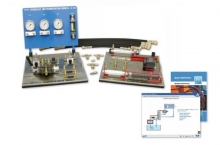 Item Number:BH-85Each Basic Hydraulics training system features standard industrial grade components. This attention to quality gives students experience they would normally only get on-the-job by helping them recognize industrial components and how to troubleshoot them more effectively. Components included with Basic Hydraulics are pre-mounted on circuit panels with silk-screened labels next to each, which facilitates ease of use and identification.
 -
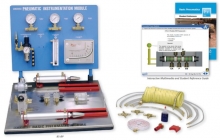 Item Number:85-BPAmatrol’s Basic Pneumatics training system (85-BP) introduces pneumatic principles through a combination of Amatrol’s top-flight multimedia curriculum with hands-on industrial pneumatic skill-building. Topics covered in this learning system include single-acting cylinder circuits, pressure vs. cylinder force, and flow control valves, while the panels can be used to practice skills such as connecting and operating a needle valve to control actuator speed.
 -
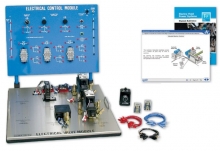 Item Number:85-EHThe Electro-Hydraulics training system includes an electrical control panel with relay control components and an electrical valve module with solenoid-operated hydraulic directional control valves and electrical/electronic sensors. These components will be used to study a variety of topics including electrical control systems, basic control devices, power devices, control relays, sequencing control, timer control, pressure control applications, and circuit applications.
 -
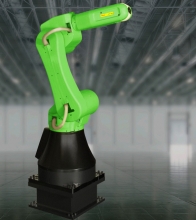 Item Number:CR-35iAFANUC’s new CR-35iA is the world’s first collaborative robot with a payload capacity of up to 35 kg. Fenceless, it opens a whole new world of possibilities. Working safely side by side with human operators, it is space as well as cost saving. And because inside it’s like any other FANUC robot, it operates like all FANUC robots. Certified to meet the requirements of ISO 10218-1:2011 and RIA/ANSI R15.06-2012, FANUC’s CR-35iA collaborative robot can work in a variety of applications alongside human workers including: machine tending, handling heavy payloads that require lift assist devices or custom equipment, higher payload mechanical assembly, palletizing or packing, and tote or carton handling.
 -
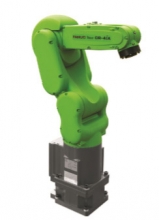 Item Number:CR-4iACR-4iA is a small collaborative robot with 4 kg payload
 -
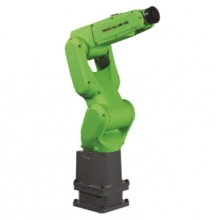 Item Number:CR-7iAThe FANUC CR-7iA is FANUC's newest collaborative robot resembles the LR Mate family. Painted green to show it's ability to work beside humans, you can expect the same reliability as FANUC's yellow robots. The CR-7iA is ideal for small part sorting and assembly, inspection, machine tending, and part delivery. It has a 7 kg payload, 717 mm reach, and is equipped with iRVision and Force Sensing. There are a variety of mounting options such as floor, wall, and ceiling.
 -
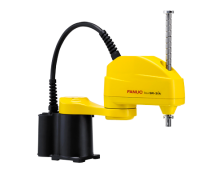 FANUC’s new SCARA robots are ideal for high-speed, precision applications such as assembly, pick and place, testing/inspection and packaging processes.
 -
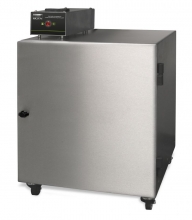
In the rare event that a burning ember or spark is drawn into the fume extraction unit, there is the possibility that debris in the filters could ignite. Although any resultant fire would typically be retained within the fume extraction unit, this would cause significant damage and in extreme circumstances, the risk may extend beyond the extraction unit. For processes where such risks have been identified, additional protection in the form of an in-line firebox is an additional precaution.
-
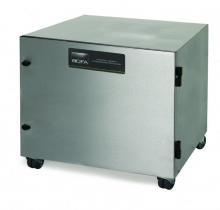
The BOFA inline pre-filter 1000 has been designed specifically for applications that generate high amounts of dust or particulate.
This inline filter unit is positioned alongside the main BOFA fume filtration system to increase the overall filter capacity and extend the life of the main filters. The DeepPleat DUO pre-filter incorporates a massive drop-out chamber within the filter, having a volume area of 15ltrs. Above the drop-out chamber but still within the housing there is a sealed 200mm deep pleat layer of F8 media giving a surface area in excess of 30 sq meters.