DAC Worldwide’s Motor Load Option (419-000) is a component part of the DAC Worldwide Motor Fundamentals Training System (410-000) that adds a consistent, measured load to the 410-000’s system motors so that learners can study the operating characteristics of different motor types while under load.
Complex Designs Fast
Deisgn Firm 3D Prints to Refine Ideas with Speed
At the Center for Advanced Design (CAD), a product development firm in Minnesota, USA, a team of design engineers specializes in creating complex surface geometry for the plastics industry. The agile team of six handles everything from industrial design concepts and digital sketching to assisting clients with implementation by building production tooling. Their ability to advance projects quickly keeps their specialized team very busy.
“We’ve carved a niche out for ourselves designing plastic components for customers in the power sports industry,” Jesse Hahne, partner at CAD, said. “Many of the larger companies we work for are very talented, but they move slower. When deadlines loom, they look to us to get their complex projects back on track.”
These tips and tricks are designed to help you create better and more stable parts using PLA materials on any of the Stratasys F123™ Series 3D Printer.
The F123CR printer series comprises the F190™CR and F370®CR composite printers, equipped with hardened components to operate with composite materials. Both systems are available with ABS-CF10 and FDM® Nylon-CF10 carbon fiber-reinforced composite materials. These materials operate with dedicated print heads for extended life. In addition, up to six engineering-grade thermoplastics are available for broader application versatility. Hands-free soluble support material enables printing highly complex parts and hands-free post-processing.
F123CR composite series printers have multiple features for ease of use and high uptime.
- GrabCAD Print™ and Insight™ software provide a simple workflow and in-depth print process control
- Fully heated build chamber enables consistent print results with multiple infills from sparse to fully dense
- Material bays located in pullout drawers allow for easy accessibility and fast changes
- Auto changeover capability on the F370CR extends print times
- Built-in camera provides visual remote print monitoring
- Power is supplied by standard wall outlets
- Printers are mounted on casters for easy mobility
Augment Machining With Composite 3D Printing
F190™CR and F370®CR FDM®
Composite Printers Supplement your fixture and part fabrication with FDM composite 3D printing to gain speed, throughput, and cost benefits.
Accessible Large-Format FDM Printing
Industrial scale printing. Simplified.
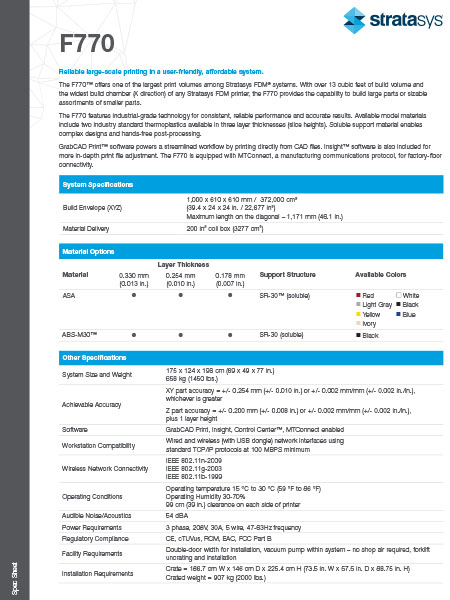
Print big without the high capital investment of exclusive, large-format printers. The Stratasys F770™ 3D printer makes printing large, complex parts affordable, reliable, and easy.
Print large or print many.
The F770 is designed with size in mind. Print one or several large parts or take advantage of the printer’s generous capacity to make multiple parts for maximum productivity.
With the longest fully heated build chamber on the market, you can print a part that is 46 inches long on the diagonal. The spacious 13 cubic-foot build envelope opens up new opportunities for manufacturing, prototyping, and production-part part applications that aren’t available with smaller printers.
There’s no need to sacrifice part complexity either. The F770 uses soluble support material, which lets you design and print your parts free from design-for-manufacturability constraints or the limitations of printers with inferior support capability. The hands-free support removal process also minimizes post-processing, increasing your productivity.
Reliable large-scale printing in a user-friendly, affordable system.
The F770™ offers one of the largest print volumes among Stratasys FDM® systems. With over 13 cubic feet of build volume and the widest build chamber (X direction) of any Stratasys FDM printer, the F770 provides the capability to build large parts or sizable assortments of smaller parts.
The F770 features industrial-grade technology for consistent, reliable performance and accurate results. Available model materials include two industry-standard thermoplastics available in three-layer thicknesses (slice heights). Soluble support material enables complex designs and hands-free post-processing.
GrabCAD Print™ software powers a streamlined workflow by printing directly from CAD files. Insight™ software is also included for more in-depth print file adjustment. The F770 is equipped with MTConnect, a manufacturing communications protocol, for factory-floor connectivity.
Built for large-scale manufacturing.
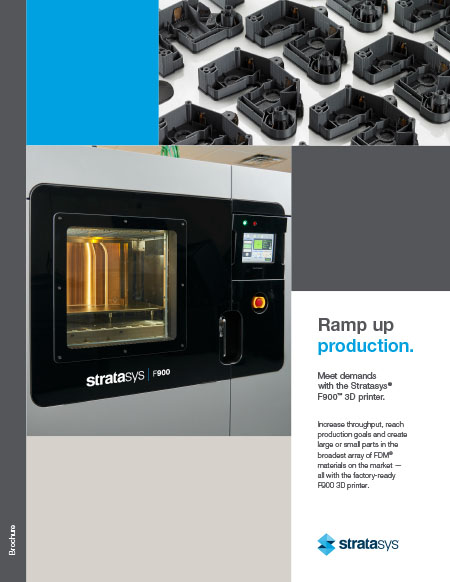
Meet demands with the Stratasys® F900™ 3D printer.
Increase throughput, reach production goals, and create large or small parts in the broadest array of FDM® materials on the market — all with the factory-ready F900 3D printer.
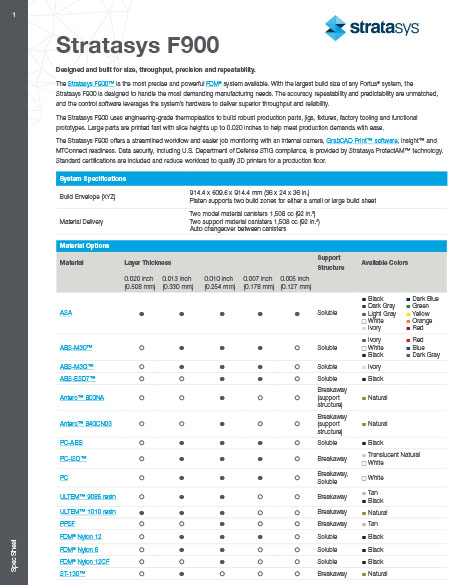
Designed and built for size, throughput, precision, and repeatability.
The Stratasys F900™ is the most precise and powerful FDM® system available. With the largest build size of any Fortus® system, the Stratasys F900 is designed to handle the most demanding manufacturing needs. The accuracy, repeatability, and predictability are unmatched, and the control software leverages the system’s hardware to deliver superior throughput and reliability.
The Stratasys F900 uses engineering-grade thermoplastics to build robust production parts, jigs, fixtures, factory tooling, and functional prototypes. Large parts are printed fast with slice heights up to 0.020 inches to help easily meet production demands.
The Stratasys F900 offers a streamlined workflow and easier job monitoring with an internal camera, GrabCAD Print™ software, Insight™, and MTConnect readiness. Data security, including U.S. Department of Defense STIG compliance, is provided by Stratasys ProtectAM™ technology. Standard certifications are included and reduce the workload to qualify 3D printers for a production floor.
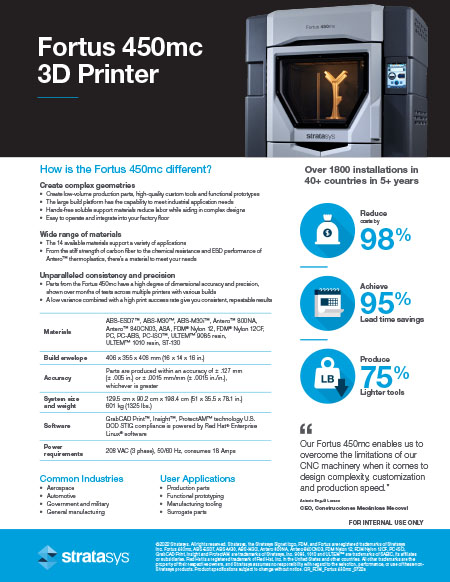
How is the Fortus 450mc different?
Create complex geometries
- Create low-volume production parts, high-quality custom tools and functional prototypes
- The large build platform has the capability to meet industrial application needs
- Hands-free soluble support materials reduce labor while aiding in complex designs
- Easy to operate and integrate into your factory floor
Wide range of materials
- The 14 available materials support a variety of applications
- From the stiff strength of carbon fiber to the chemical resistance and ESD performance of Antero™ thermoplastics, there’s a material to meet your needs
Unparalleled consistency and precision
- Parts from the Fortus 450mc have a high degree of dimensional accuracy and precision, shown over months of tests across multiple printers with various builds
- A low variance combined with a high print success rate give you consistent, repeatable results
Industrial FDM technology with an open material ecosystem for advanced prototyping, tool production and end-use parts.
Bring the speed, agility, and design freedom of advanced additive manufacturing to your business while gaining the latest advances in FDM® technology. The Fortus 450mc™ 3D printer builds high-requirement functional prototypes, rugged manufacturing tooling, and custom production parts in its large 16 x 14 x 16 in. build envelope. Fourteen Stratasys Preferred Materials, multiple Stratasys Validated Materials, and soluble support address various applications.
OpenAM™ software lets users alter print parameters to optimize material capabilities and print results. GrabCAD Print™ and Insight™ software provide an easy CAD-to-print workflow and in-depth print processing control. MTConnect and Stratasys Software Development Kits let you integrate the Fortus 450mc into your connected factory floor. Data security, including U.S. Department of Defense STIG compliance, is provided by Stratasys ProtectAM™ technology.
Pages
-
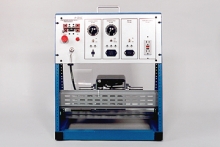 Item Number:419-000
 -
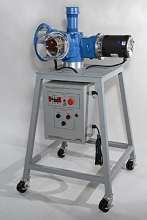 Item Number:212-000DAC Worldwide’s Motorized Multi-Turn Valve Actuator Trainer (212-000) is a multi-functional device used for hands-on multi-turn actuator training.
 -
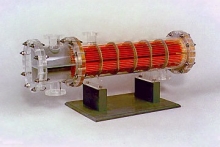 Item Number:286Tech-Labs technical training solutions.
 -
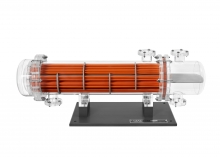 Item Number:287DAC Worldwide’s Multi-Pass Floating Head Heat Exchanger Training Model (287) is a highly-detailed scale model of a multi-pass, floating head, heat exchanger, supporting training in the operation and maintenance of industrial heat exchangers.
 -
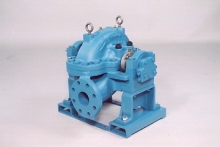 Item Number:275-160-PAC / 275-160G-PACDAC Worldwide’s Multi-Stage, Split Case Pump Dissectible 275-160-PAC is an industrial pump for hands-on training relating to process pumps.
 -
 Build a future-ready STEM and CTE classroom with the NeuroMaker Hand 2.0 – a programmable prosthetic hand kit that teaches biotechnology, robotics, and coding through real-world, hands-on learning.
 -
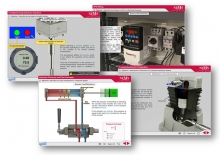 The Industrial Technology Maintenance (ITM) certification features nine stackable credentials allowing students to find a job while completing each duty area.
 -
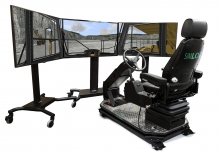 Item Number:OHTThe simulation software puts you at the controls of a modern "rock truck" at work in a typical quarry, in interaction with a simulated Wheel Loader. You can even use the keyboard function keys and mouse controls during the simulation to change the point of view!
 -
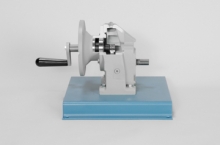 Item Number:205-250DAC Worldwide’s Offset In-Line Helical Gear Reducer Cutaway (205-250) is one of an extensive series of actual industrial gear reducer cutaways for use in hands-on mechanical drives training in either the classroom or the laboratory.
 -
 Item Number:205-150The dissectible features a carefully restored, sectioned, industrial offset in-line helical gear reducer to provide learners with a realistic training experience.